
Merge Hope: Build & Story
37GAMES-GLOBAL-ENTERTAINPuzzle
3.856.00 Reviews
- Version
- 1.0.0.8
- Installs
- 50.00K
- Age Rating
- Everyone
Screenshots
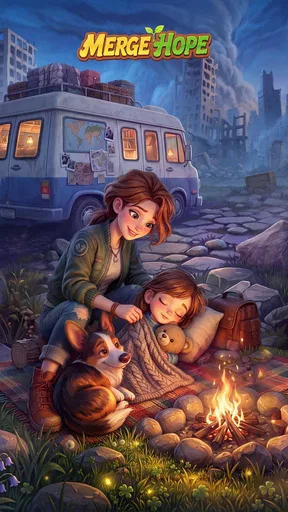
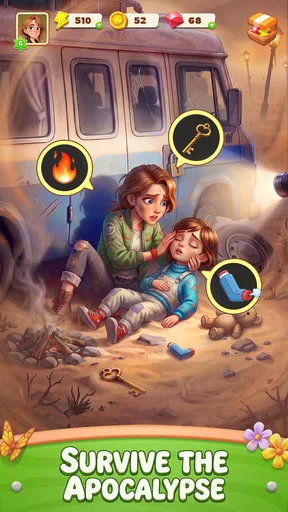
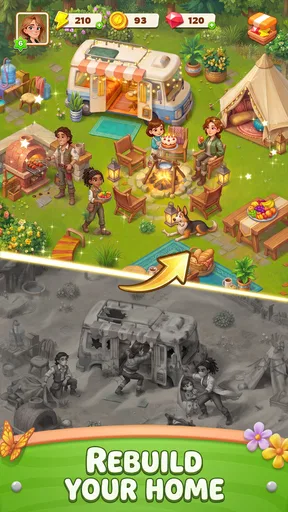
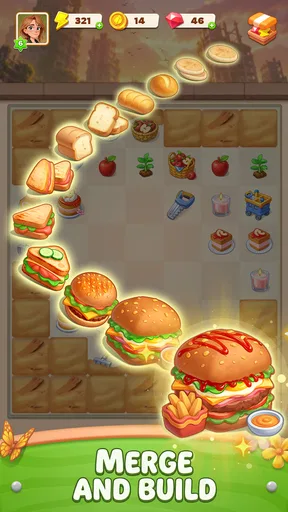
Our Review of Merge Hope: Build & Story
 Analysis by Appyee
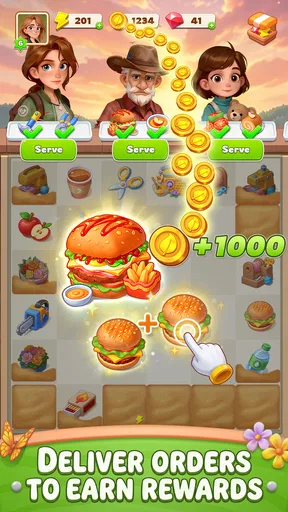
Merge Hope: Build & Story is a free puzzle game built around a simple promise: rebuild a damaged home by making useful combinations and turning small actions into visible progress. I found its appeal in the way it gives an ordinary merge move a clear purpose. You are not only arranging pieces for a score; each successful step is connected to restoring a place and moving the story forward.
That focus makes it easy to understand within a few moments. The first action is familiar to anyone who has played a merge puzzle: combine matching items, create something more useful, and use the result to advance. The difference is the setting. The work feels tied to a larger recovery project, so even a modest reward has more meaning than an isolated number on a board.
How the merge loop feels in everyday play
I look at the merge loop as a small planning exercise, not just a way to make the board look tidier. When I have only a moment, I choose a move that leaves the next decision easy to read; with more time, I can weigh whether a useful piece is worth saving. That difference in pace shapes how the rebuilding goal feels from one visit to the next.
The first move is clear, but planning matters quickly
My first useful habit was to resist merging the moment two matching pieces appeared. In a game shaped around rebuilding, space becomes part of the puzzle. A quick combination may solve an immediate problem, but keeping a few pieces available can make the next chain easier to manage. That small decision adds more thought than the basic controls suggest.
The controls are approachable enough for casual play. You can pick it up during a short break without learning a complicated ruleset, yet the board still asks you to look ahead. I enjoyed that balance because the game does not require a long explanation before the first satisfying result. The action is direct: identify a pair, merge it, receive the improved item, and decide what should happen next.
That sequence is especially suitable for players who like tidy, incremental progress. If you prefer puzzle games where every move is about finding one exact solution, this may feel looser. The pleasure here comes from managing a growing collection, spotting opportunities, and choosing when a combination is worth the space it consumes.
Feedback gives each move a reason
The strongest part of the experience is the feedback rhythm. A merge produces an immediate result, and that result points toward another objective. The board changes, the available options change, and the rebuilding theme gives the move a visible destination. I never felt that a successful action disappeared into an abstract counter.
That rhythm can be described simply: action, response, reward, then another decision. I make a combination, see a better item appear, use that progress toward the home, and then reassess the board. The reason to continue is not merely that the previous move was pleasant. It is that the new item may unlock the next useful step.
This structure also makes mistakes understandable. If the board becomes awkward, I can usually trace the problem to an earlier choice: merging too soon, filling space without a plan, or using an item that would have been more valuable later. That sense of responsibility is a welcome change from puzzle games where failure feels random.
Rewards feel better when they change the scene
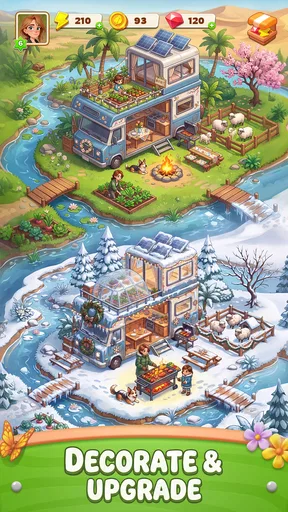
The rebuilding theme is most effective when progress feels connected to the environment. Instead of treating rewards as decoration around the puzzle, the game gives them a practical emotional role: they represent another part of the home being recovered. That makes a chain of small combinations feel like a project with direction.
I also like the way this encourages short-term goals. A player can focus on the next useful merge rather than worrying about the entire restoration at once. This is helpful in a realistic everyday situation. Imagine opening the game while waiting for a bus, completing a few combinations, and stopping after a small improvement. The session can still feel complete because the home has moved forward, even if the larger rebuild is unfinished.
For younger players and families, the Everyone age rating makes the presentation easier to approach. I would still recommend that adults look at the purchase settings before handing a device to a child, because optional in-game items range from $0.99 to $99.99 each. The game is free to start, but “free” does not mean every possible shortcut or purchase is free.
Why another session begins
The end of a short session is not really an ending. After a few merges, the board has changed and the next useful combination is often more visible than it was before. That creates a natural reset: I put the game down when the space feels crowded or my attention moves elsewhere, then return with a fresh view of the same rebuilding task.
This reset works better than an endless stream of unrelated levels because the unfinished home gives the return visit context. I know why I am coming back. There is another section to improve, another chain to complete, or another awkward group of pieces to organize. The loop depends on gradual restoration rather than a single dramatic victory.
Still, that design will not suit everyone. Players who need a strong conclusion after every session may find the ongoing rebuild less satisfying. It is also not the ideal choice if you want a fast reflex challenge or a puzzle with one definitive solution. The game rewards patience and repeated organization more than speed.
Small strategies that make the board easier
My most useful approach was to treat open space as a resource rather than empty background. Before merging, I checked whether the new item would leave room for the next likely combination. This prevented the common problem of creating a stronger piece while making the rest of the board harder to read.
A second helpful habit was to separate immediate progress from long-term progress. If a merge solved the current task but consumed a piece that could support a larger chain, I paused before committing. That does not mean saving everything forever; it means deciding whether the reward is worth the position it creates.
A third insight is that the rebuilding theme can guide priorities when several moves look equally attractive. I favored the combination that supported the current restoration goal instead of making the most visually impressive item. That kept the session focused and reduced aimless board management.
These are not complicated techniques, but they change the feel of play. The game remains accessible, while careful players get a reason to think beyond the next tap. I found that this middle ground is more interesting than a purely automatic merge system.
Where the free model affects the experience
The game costs nothing to download, which makes it easy to try without committing money at the start. That is a real advantage for casual players who want a gentle puzzle rather than a premium purchase. At the same time, the presence of optional purchases means that players should decide in advance whether they want to play only with the normal progression or spend for available items.
For me, the best way to approach it is to treat purchases as optional conveniences rather than part of the basic promise. If you enjoy earning progress through repeated play and careful board choices, the free entry point is appealing. If you dislike any game that presents paid options, even when they are not required for your style of play, this may be a poor match.
The current version is 1.0.0.8, and the game comes from 37GAMES-GLOBAL-ENTERTAIN. Its early scale is modest, with over 50 thousand installs, while the average rating sits at 3.8 from around 178 ratings and 56 reviews. I read that combination as a sign that the game has found an audience but is still better approached as a focused casual title than as a universally polished puzzle standard.
Who will enjoy restoring the home
I would recommend this game to people who like merge puzzles with a clear visual purpose. It is a good fit if you enjoy watching a messy board become more organized, prefer progress that accumulates gradually, and like being able to stop after a short session without losing the thread of what you were doing.
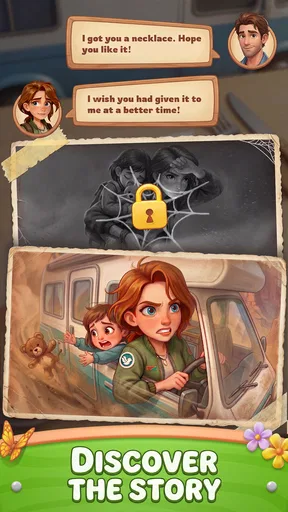
It also suits players who enjoy light narrative motivation without needing a deep, dialogue-heavy story. The home-rebuilding idea supplies enough direction to make the puzzle feel personal, while the main attraction remains the act of combining items and improving the setting.
On the other hand, I would skip it if you are looking for competitive leaderboards, demanding logic problems, fast arcade movement, or a complete experience with no optional spending. I would also choose a more traditional match puzzle if my priority were quick rounds with an obvious beginning and end. Here, the most satisfying moments come from the accumulation of many small decisions.
How it compares with familiar puzzle alternatives
Compared with a standard match-three game, this title feels less focused on clearing a fixed pattern and more focused on building an evolving collection. A match-three alternative is usually better when I want immediate visual effects and a compact objective. This game is better when I want the board itself to develop and my choices to influence what becomes possible next.
Compared with a pure merge sandbox, the home-restoration setting gives the actions more direction. A sandbox can be relaxing because it has fewer demands, but it may also feel aimless after the novelty fades. Here, the rebuilding goal helps answer the question, “What should I do next?” That guidance is one of the game’s clearest strengths.
Compared with premium puzzle games, the free entry point is more welcoming, but the optional purchase range changes the decision. A paid game may offer a cleaner, more self-contained experience for someone who wants to pay once and avoid ongoing choices. This one is more convenient to sample, especially for casual use, but it asks the player to be comfortable with a free-to-start structure.
Practical expectations before installing
The game requires Android 7.0 or later, so it is accessible on many older Android devices that still meet that requirement. I would check the operating system before trying it, particularly if the device has been kept for several years. The title is also available as an iOS and Android game, making it a straightforward option for people who move between those mobile ecosystems.
Because the central loop is built around repeated progress, this is not a game I would install expecting one long, dramatic playthrough. Its best use is as a returning companion: a few minutes while taking a break, a longer session when I want to organize the board, then a pause before coming back to continue the rebuild.
The most important question is whether that repetition feels rewarding to you. If the answer is yes, the reset after each session becomes a strength. You leave with a changed board and a clear reason to return. If the answer is no, the same structure may feel like doing similar work again and again without enough variety.
My verdict on the complete loop
After spending time with it, I see the game as a calm, purpose-driven merge puzzle rather than a demanding strategy title. Its core loop is easy to explain but more engaging when played thoughtfully: make a combination, watch the board respond, use the reward to rebuild, stop when the space or attention runs low, and return because the next improvement is already waiting.
The best reason to play is the connection between a small merge and a visible step toward rebuilding the home. That link gives ordinary puzzle actions a little more emotional weight. It also creates a useful sense of closure at the end of a short session, even though the larger project continues.
I would recommend Merge Hope: Build & Story to casual puzzle players who enjoy gradual restoration, light planning, and a game that can be played in small visits. I would be more cautious about recommending it to anyone who wants intense challenge, a completely purchase-free structure, or a tightly finished puzzle campaign. For the right player, though, the combination of simple actions, clear feedback, meaningful rewards, and a natural reason to begin another session makes this a pleasant way to spend spare time.
Verdict
Strengths of Merge Hope: Build & Story
- Relaxing merge gameplay is easy to learn and suitable for short sessions.
- Story-driven progression gives the rebuilding tasks a clear sense of purpose.
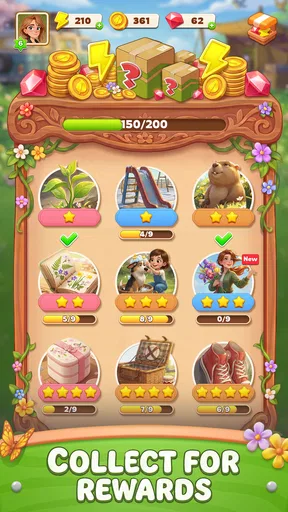
- A variety of restoration projects keeps objectives from feeling repetitive.
- Offline play makes it convenient for travel or areas with limited connectivity.
- Bright visuals and gentle presentation make it approachable for casual players.
Limitations of Merge Hope: Build & Story
- Energy limits can interrupt play when you want to complete several tasks quickly.
- Some upgrades and progress may require patience or repeated resource gathering.
- The merge board can become crowded and make item management less convenient.
- Later restoration stages may feel slower than the opening chapters.
- Optional purchases may appeal to players who want faster progress.
Similar Picks in This Category
View All
Block Blast!
HungryStudio4.8

Braindom: Brain Games Test
Lahana Game Studio4.6

AMAZE!
CrazyLabs LTD4.6

Sudoku - Classic Sudoku Puzzle
Oakever Games4.7

Art Puzzle - Puzzle Games
Easybrain4.8

Amaze GO!
Oakever Games4.9
Frequently Asked Questions
What is Merge Hope: Build & Story about?
Merge Hope: Build & Story is a casual merge game that combines resource management, town rebuilding, and a narrative campaign. You merge matching items to create upgraded materials, complete objectives, restore damaged areas, and gradually uncover the story behind the characters and their community. Its relaxed progression makes it suitable for players who enjoy puzzle mechanics with light simulation and storytelling elements.
How does the merging gameplay work?
The core gameplay involves combining identical objects on a board to produce more advanced items. These upgraded materials are then used to complete orders, repair buildings, unlock locations, and progress through story chapters. The board can become crowded, so planning merges carefully is important. Players generally need to balance immediate tasks with saving useful items for larger objectives later in the game.
Can Merge Hope: Build & Story be played offline?
Some parts of Merge Hope: Build & Story may remain available without a constant internet connection, particularly basic board interactions and previously loaded content. However, online access can be required for advertisements, cloud synchronization, events, updates, purchases, and certain story or reward features. Availability may differ by device and version, so an internet connection is recommended for the complete experience.
Does the game include ads or in-app purchases?
Merge Hope: Build & Story is free to download, but it may use optional advertisements and in-app purchases as part of its progression model. Ads can sometimes provide bonuses such as extra energy or rewards, while purchases may offer currency, boosters, or faster progress. You can usually play without spending money, although waiting for energy and managing resources may be necessary.
Is Merge Hope: Build & Story suitable for children?
The game is generally approachable because its controls are simple, its merge mechanics are easy to understand, and its story is presented in a family-friendly style. Nevertheless, parents should review the age rating, advertising practices, and available in-app purchases before allowing younger players to use it. Device-level purchase restrictions are advisable if children can access the game independently.
Play our best games!


